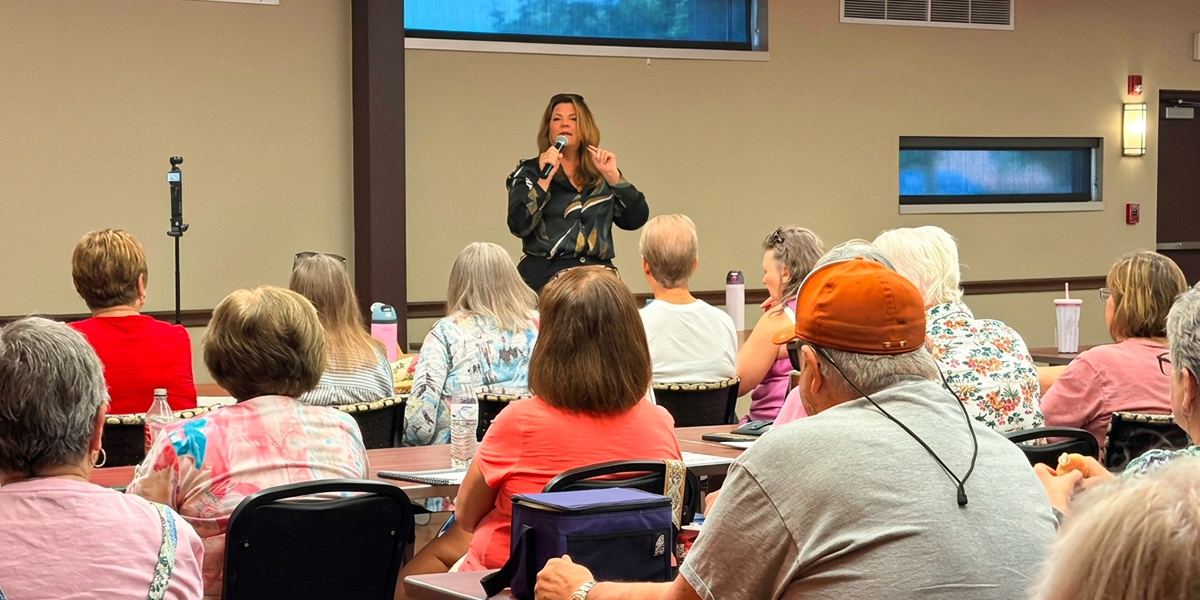
Sherri L. Combs, Founder of Silver Streak Senior Services, is a former JPMorgan Chase private banker who saw firsthand how financial exploitation actually took place. She believes protecting people from financial fraud takes more than warnings about suspicious calls, emails and investment offers. People need to understand how scammers gain trust in the first place.
At JPMorgan Chase, Combs witnessed customers lose substantial sums of money to people who had convinced them they were making sound financial decisions. Many were educated, financially experienced and fully convinced that the opportunities in front of them were legitimate. She also noticed how people rarely recognize a scam while they are caught in it because scammers establish emotional connections, exploit personal beliefs and create a sense of urgency.
This is also a major reason why victims become deeply invested and sometimes even turn on people trying to help them.
That led Combs to a question: why does so much fraud education begin after someone has already been targeted?
She highlights the need for early education, supportive family conversations and practical prevention methods that people can use before making financial decisions.
Why Intelligent and Financially Experienced People Fall for Scams
There is a very common misconception about financial fraud: victims lack intelligence or financial knowledge.
But that is not what Sherri L. Combs reveals. In private banking, she encountered attorneys, accountants, insurance professionals, business owners and highly educated individuals who became involved in elaborate scams.
As Combs explains, “They didn’t believe they were being scammed. They believed they were finally being given an opportunity.”
This also leads to them seeing a warning as an obstacle rather than protection.
Scammers also study their targets. They pay attention to personal interests, financial concerns, religious beliefs and emotional needs, and then tailor their messages around what is important to the individual.
That’s why learning to recognize manufactured trust works better than simply telling someone to be more careful.
Scammers manufacture trust through a series of interactions. They establish contact, build familiarity and gradually introduce an opportunity. By the time they ask for money, it only feels like a reasonable next step. They also use hope as an incentive to keep victims involved. Victims are encouraged to give a little more, wait longer or ignore people questioning the arrangement.
Accepting a warning, to victims, could mean admitting that their judgment was wrong or questioning something they deeply believe.
Financial Institutions Cannot Prevent Fraud Alone
Sherri L. Combs also observed that bankers and branch managers recognized suspicious transactions and attempted to persuade customers to reconsider. But financial institutions have to respect customer authority, privacy laws and regulatory requirements. A banker cannot take control of an adult customer’s financial decisions.
Many customers insisted on sending the money anyway, despite repeated warnings. Days or weeks later, they returned to the bank for help after discovering that the person they trusted had disappeared.
Combs shared that the most heartbreaking part was when they asked, “Is there anything you can do to get it back?”
Recovery, however, isn’t always possible.
Older adults end up losing money intended for housing, medication, food and long-term care. They also lose confidence in their own judgment and become reluctant to discuss what happened. This leads to Combs’ conclusion: families and communities need access to the same kind of fraud awareness education.
Fraud Prevention Through Sherri L. Combs’ PROVE IT™ Method
Sherri L. Combs developed a method that people could remember and apply when faced with a financial decision: the PROVE IT™ Method.
This is a five-step approach that shows how to do independent verification.
- Pause: Stop before clicking a link, responding to a message or transferring money and don’t follow requests that demand immediate action.
- Review the Red Flags: Examine the message, offer or request carefully to look for inconsistencies, unusual promises and warning signs.
- Obtain a second Opinion: Speak with someone trustworthy who is not involved in the situation.
- Verify Independently: Confirm the claims independently. Use contact details from official websites or other reliable sources.
- End the transaction: Stop communicating or engaging if the claims cannot be verified.
Knowing that scams exist does not necessarily mean someone will recognize one when it happens. This method is a practical roadmap to follow under pressure.
As Combs puts it, “Before you open it, click it, buy it, wire it, or believe it, make them PROVE IT.”
How Families Can Play a Role
Families can support someone who may be caught in a scam. Combs encourages asking “Can we look at this together?” or “What would happen if we waited until tomorrow?” instead of immediately insisting that the person is being deceived.
Fraud Prevention Requires Education
Education should become a regular part of community life. Schools, senior centers, financial institutions, faith communities and local organizations can all contribute to fraud awareness.
Through Silver Streak Senior Solutions, her nonprofit, Combs expands access to fraud prevention education through resources, workshops and practical tools. Through Silver Streak Senior Services, she connects older adults, caregivers and families with verified service providers across more than 240 categories. Her book, The Just in Case Plan, prepares families for aging-related decisions before an emergency makes those conversations unavoidable. The book has earned multiple honors, including 1st place in the Next Generation Indie Book Awards (Social Change) and 2nd place in the CIPA EVVY Book Awards. Signed copies are available at thejustincaseplan.com.
Silver Streak Senior Solutions’ Fighting Senior Fraud through Education initiative recently received a Bronze Anthem Award in the Community Outreach, Humanitarian Action & Services category at the 6th Annual Anthem Awards. Selected by the International Academy of Digital Arts and Sciences, the recognition places the initiative among more than 2,500 submissions from 43 countries.
Leading a More Prepared Generation
Sherri L. Combs believes fraud prevention is a shared responsibility. She also believes that protecting older adults requires preserving their dignity. People should not have to sacrifice their kindness, independence or willingness to trust others because scammers exploit those qualities. Instead, they should have practical ways to verify information and recognize manipulation.
To learn more about her work, visit sherricombs.com and silverstreakhelp.com, support senior fraud education at silverstreakseniorsolutions.org, or connect with Sherri L. Combs on LinkedIn.