

Volker (VJ) Jaeckel: Turning Complexity into Clarity in Modern Business Leadership
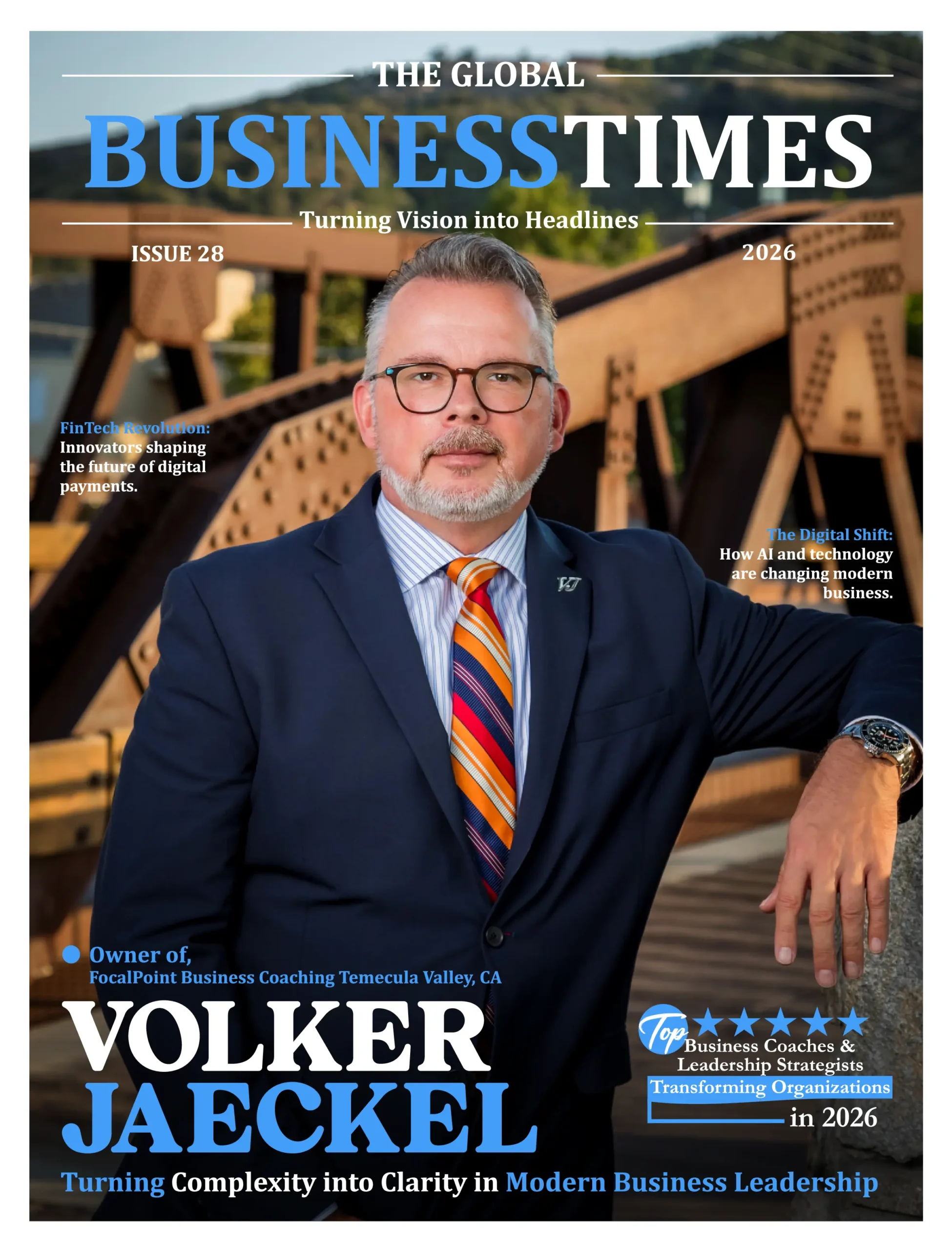
From Global Marketing Executive to Executive Coach Shaping High-Performance Leadership and Digital Transformation
In a business world defined by constant disruption, rapid technological change, and increasing pressure on leaders to deliver measurable growth, few professionals have navigated as many layers of transformation as Volker (VJ) Jaeckel. His career spans more than four decades across Europe and the United States, moving through senior marketing leadership, international business strategy, and ultimately into executive coaching and behavioral intelligence.
Today, as Founder of FocalPoint Business Coaching Temecula Valley and a fractional CMO, he works with entrepreneurs and executives who are often highly capable but structurally stuck. His work is centered on a simple but persistent challenge in modern leadership. Most organizations do not fail because of a lack of ideas or effort, but because of misalignment, communication breakdowns, and unclear execution systems.
His perspective has been shaped by decades inside high-stakes decision environments, where strategy is not theoretical and outcomes are measured in revenue, performance, and organizational clarity. That experience now informs a coaching philosophy built on precision, accountability, and behavioral understanding.
A GLOBAL CAREER BUILT ACROSS MARKETS AND CULTURES
The foundation of Jaeckel’s leadership journey began in sales and marketing across Europe before expanding into the United States, Germany, and Italy. Over more than 40 years, he worked in environments where marketing strategy and executive decision-making directly influenced business outcomes at scale.
He eventually reached senior executive responsibility at the chief marketing officer level, operating in spaces where alignment across departments determined whether organizations grew or stalled. These experiences exposed him to one recurring truth. Strategy alone does not drive success. Execution clarity does.
Along the way, he earned professional certifications including Professional Certified Marketer through the American Marketing Association and Certified Digital Marketing Professional through the Digital Marketing Institute in Dublin. However, he describes his professional evolution less as a collection of credentials and more as a continuous study of how businesses actually function under pressure.
What stood out most across industries and geographies was not difference, but similarity. Organizations struggled in predictable ways. Leaders communicated assumptions rather than clarity. Teams executed without shared understanding. Growth efforts created complexity instead of focus.
These patterns would later become the foundation of his coaching methodology.
THE MOMENT LEADERSHIP BECAME ABOUT PEOPLE, NOT JUST PERFORMANCE
A defining shift in Jaeckel’s career came when he began to recognize a consistent gap among business owners and executives. Many were highly intelligent, deeply committed, and operationally busy, yet they were not achieving the outcomes they expected.
The issue was rarely effort. It was alignment.
This realization shifted his focus from marketing leadership alone toward leadership development and executive coaching. Instead of optimizing campaigns or organizational messaging, he began focusing on the thinking patterns behind leadership decisions.
Over time, he found that his most meaningful impact came not from advising organizations on what to do, but from helping leaders understand why their current approach was not producing results.
Coaching became the natural extension of his experience. It allowed him to combine communication expertise, behavioral analysis, and strategic thinking into a direct, results-oriented approach to leadership transformation.
Writing also became an important part of this evolution. With more than 40 published articles across platforms such as SocialMediaToday.com, Digital Dealer Magazine, The Executive’s Diary, and MSN, he has consistently focused on making complex business concepts practical and actionable. His May 2026 cover feature in The Executive Lens reflected this same philosophy of translating leadership theory into usable insight.
COMMUNICATION BREAKDOWN IS THE REAL BUSINESS PROBLEM
One of the strongest themes in Jaeckel’s perspective is that communication, not strategy, is the most common failure point in organizations.
Having worked across multiple countries and business environments, he observed that a plan that appears clear in one cultural or operational context can be interpreted very differently in another. These misalignments are rarely visible at the strategy level but become evident during execution.
At the executive level, he learned that revenue is not generated by isolated effort. It is the result of clarity, alignment, and shared understanding across teams.
This insight became central to his coaching philosophy. Instead of focusing first on tactics or tools, he emphasizes clarity of communication as the foundation of performance. Without it, even strong strategies fail to translate into results.
He often frames leadership not as authority, but as the ability to create shared understanding that enables coordinated action.
THE POWER OF BEHAVIORAL INTELLIGENCE IN LEADERSHIP
A major influence in his coaching methodology is behavioral science, particularly DISC Behavioral Analysis.
Rather than treating behavior as abstract personality traits, DISC provides a structured way to understand how individuals communicate, make decisions, and respond under pressure.
For Jaeckel, DISC is not a personality label but a diagnostic tool. It helps identify where communication breaks down within teams and why certain interactions consistently create friction.
A common pattern he identifies is the mismatch between leadership style and team interpretation. A fast, direct leader may believe they are being efficient, while a more detail-oriented team member may experience the same communication as overwhelming or unclear.
Once these patterns are visible, leaders can adjust their communication approach. This leads to improvements in hiring decisions, delegation effectiveness, and conflict resolution.
In his view, behavioral intelligence is one of the most underutilized tools in modern leadership because it shifts conversations from blame to understanding.
FROM MARKETING EXECUTION TO STRATEGIC TRANSFORMATION
Throughout his career, Jaeckel held senior roles that required balancing creativity, analytics, and organizational leadership. As a chief marketing officer, he learned that successful execution depends on alignment rather than intensity.
Teams do not fail because they lack talent. They fail because they are not aligned on priorities.
This insight shaped his approach to organizational transformation. Instead of introducing more complexity, he focuses on removing friction. The goal is to simplify decision-making structures so teams can operate with clarity and consistency.
Over time, this approach has helped generate measurable improvements in client performance, not through isolated tactics, but through systemic alignment.
He emphasizes that leadership effectiveness is less about doing more and more about ensuring that what is already being done is coherent and focused.
BUILDING SYSTEMS THAT SCALE BEYOND THE OWNER
A recurring challenge among entrepreneurs, in his experience, is over-reliance on the founder or executive. Many businesses remain dependent on one individual for decision-making, problem-solving, and execution oversight.
This creates a structural limitation. No organization can scale sustainably if it depends on constant intervention from a single leader.
Jaeckel’s coaching focuses heavily on systemization. This includes defining roles clearly, establishing repeatable processes, and ensuring that communication flows efficiently across the organization.
When systems are strong, organizations become less dependent on individual heroics and more reliant on structured execution.
He believes scalability is not primarily a financial challenge but a leadership design challenge.
DIGITAL TRANSFORMATION AND THE FUTURE OF BUSINESS LEADERSHIP
Digital transformation has reshaped how organizations operate, but Jaeckel believes its most important impact is still unfolding.
Artificial intelligence, automation, and data-driven marketing tools are accelerating execution capabilities across industries. However, he cautions that technology amplifies existing leadership clarity rather than replacing it.
If leadership is unclear, technology accelerates confusion. If leadership is clear, technology amplifies effectiveness.
He views modern tools as execution enablers rather than decision-makers. The role of leadership is to define priorities, interpret insights, and maintain strategic direction.
In this environment, the most valuable leaders are those who can combine technological fluency with behavioral awareness and strategic discipline.
COMMON LEADERSHIP MISTAKES IN MODERN ORGANIZATIONS
Across industries, Jaeckel consistently observes three recurring leadership mistakes.
The first is overextension, where leaders attempt to manage too many functions instead of delegating effectively. This creates bottlenecks and limits organizational growth.
The second is assumption-based communication. Leaders often believe instructions are clear when they are not, resulting in misaligned execution.
The third is reactive decision-making, where organizations chase tools or tactics without clearly defining the underlying problem.
His solution framework is simple. Clarity first, systems second, accountability always.
SELF-AWARENESS AS THE FOUNDATION OF EFFECTIVE LEADERSHIP
Self-awareness is central to Jaeckel’s philosophy because it directly influences communication and decision-making.
Leaders often perceive their communication one way while their teams experience it differently. This gap creates repeated misunderstandings and performance issues.
He encourages leaders to use behavioral assessments, structured feedback, and reflective practice to understand how they are perceived in real operational environments.
Self-awareness, in his view, is not introspective theory. It is a practical leadership skill that determines whether communication translates into results.
THE FUTURE OF LEADERSHIP AND COACHING
Looking ahead, Jaeckel believes the coaching industry is moving toward greater accountability and practicality. Leaders no longer need abstract frameworks. They need direct, measurable outcomes.
His approach emphasizes speed, clarity, and execution. Instead of long diagnostic phases, he focuses on identifying core issues quickly and addressing them through structured action.
He believes the future of leadership will be defined by individuals who can combine behavioral intelligence, operational clarity, and technological awareness into a unified leadership style.
The organizations that succeed will be those that remove unnecessary complexity and strengthen communication at every level.
A LEGACY BUILT ON CLARITY AND RESULTS
Across his career, from international marketing leadership to executive coaching, Jaeckel’s work has consistently focused on one principle. Clarity drives performance.
Whether working with executives, entrepreneurs, or leadership teams, his goal remains the same. Help leaders understand what is really happening inside their organizations and give them the tools to improve it.
His legacy, as he describes it, is not about recognition but about outcomes. It is about helping businesses operate more effectively, leaders communicate more clearly, and teams work with greater alignment.
In a business environment defined by complexity, his philosophy remains grounded in simplicity. Clarity beats chaos, every time.