The future of healthcare depends on more than advanced technology. It requires a deeper understanding of human biology and the recognition that every population deserves to benefit from scientific progress. At the intersection of medicine, artificial intelligence, and genomics, Vinod Gauba is working to address one of the most important challenges facing modern healthcare: making precision medicine more representative, inclusive, and accessible.
A physician-entrepreneur with more than 25 years of clinical and research experience, Gauba has dedicated his work to improving how biological data is collected, governed, and used in scientific discovery. His approach is built around a simple but important principle: medical technologies can only deliver reliable results when the science behind them represents the diversity of the people they are designed to serve.
As Chairman of the Count Us In Foundation, CEO of Panhuman, and Founder of GeneVault, Gauba is developing an interconnected approach to bringing underrepresented populations into global biomedical research while ensuring that communities and institutions retain control over their data and benefit from the discoveries it supports.
Addressing the Representation Gap in Modern Medicine
One of the major challenges in precision medicine is the limited diversity of the biological data used to develop modern medical tools. A significant proportion of genomic research has historically focused on people of European ancestry, leaving many populations underrepresented in the scientific evidence that informs healthcare decisions.
This imbalance creates a scientific challenge, not simply an issue of representation. When medical models are trained on limited populations, their predictions may become less reliable when applied to people whose biology is not adequately represented in the underlying research.
Gauba has consistently highlighted this concern in his work and public discussions. He believes that precision medicine cannot be more accurate than the biological evidence supporting it. For him, improving representation is essential to developing medical solutions that work reliably across different populations.
His perspective also extends to clinical practice. Healthcare professionals, he argues, should understand which populations an AI model was trained on and whether its results have been validated in people similar to the patients receiving treatment.
Building a More Inclusive Foundation for Biological AI
Through Panhuman, where he serves as CEO, Gauba is working to advance biological foundation models that better reflect the diversity of human biology.
The company’s objective is to complement existing models by extending their capabilities across populations that have historically been underrepresented in genomic research. Rather than replacing established scientific models, the approach focuses on making biological AI more representative and useful across different human populations.
An important part of this model is its approach to data ownership. Panhuman does not hold data or operate clinical programmes. Instead, the data remains with the institutions and organisations responsible for its stewardship, while the intelligence developed through AI can be applied more broadly.
This approach reflects Gauba’s belief that scientific progress and responsible data governance must advance together. Better biological intelligence requires access to broader evidence, but that access must be built on trust, transparency, and respect for the institutions and communities contributing the data.
Putting Communities at the Centre of Global Research
As Chairman of the Count Us In Foundation, Gauba is working to bring data from historically underrepresented populations into global scientific research.
The independent nonprofit focuses on creating a framework through which institutions can participate in international research while maintaining ownership and control of their data. Participating institutions join the Foundation’s charter and have representation on regional councils that govern the programme.
The initiative also places importance on ensuring that contributing communities receive meaningful benefits. These include scientific recognition, access to models, local capacity building, and shared value generated through their participation.
For Gauba, this is essential to building lasting relationships between global research organisations and local institutions. Communities should not simply provide data for scientific advancement; they should also have a voice in how that data is used and benefit from the outcomes.
His work reflects a wider understanding that trust cannot be added to research programmes after they have been established. It must be part of their structure from the beginning.
Strengthening the Infrastructure for Ethical Data Collaboration
Gauba’s work also includes GeneVault, a Public Benefit Corporation he founded to support the development of suitable human cohorts for pharmaceutical companies and advanced AI research.
GeneVault works with data custodians, national programmes, and researchers to make genomic, multi-omic, and real-world health data available for scientific advancement in a secure, ethical, and compliant manner.
The organisation follows a custodian-first approach, ensuring that data remains under local governance and control while enabling responsible research collaboration.
This work addresses an important gap in biomedical innovation. Scientific organisations need diverse and reliable datasets, but institutions must also have the necessary infrastructure, governance arrangements, and capabilities to participate confidently.
By connecting these requirements, Gauba aims to help create a research environment where institutions can contribute to global discoveries without compromising their responsibilities toward the people and communities they represent.
Taking the Conversation Beyond Technology
Gauba has also been actively involved in international discussions on genomics, responsible AI, and precision medicine.
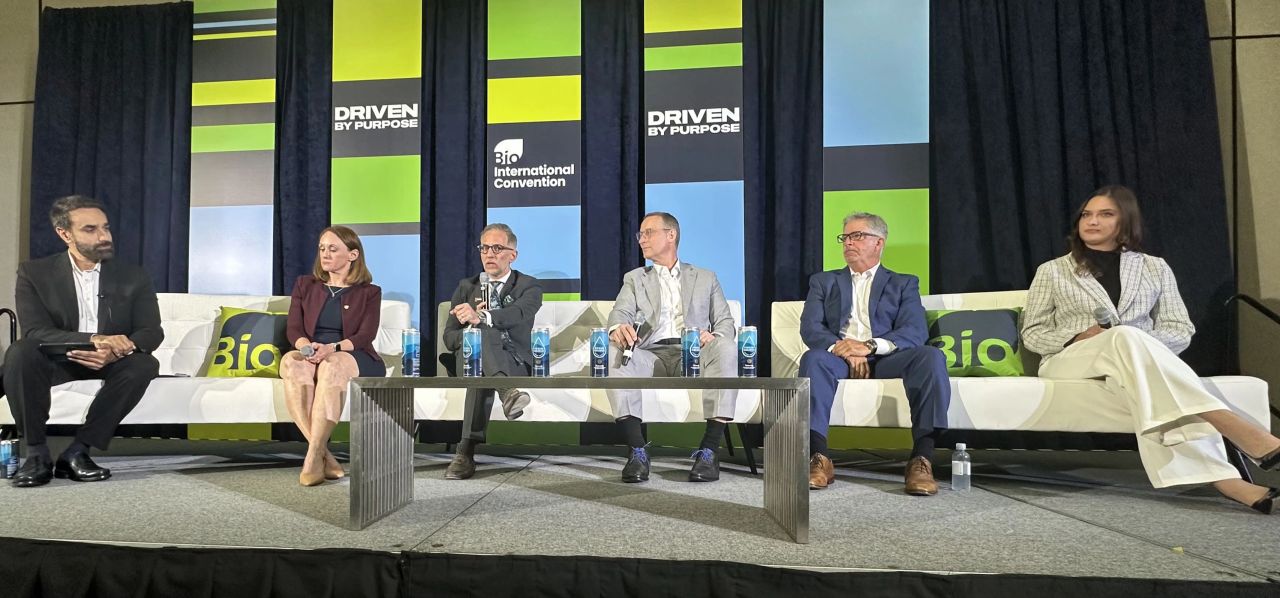
At the BIO 2026 conference, he participated in the “Data Without Borders” discussion, which explored how representative biological data could become more accessible to research while maintaining community trust and institutional control.
He has also contributed to discussions at the Global Alliance for Genomics and Health’s 14th Plenary in Singapore, where questions surrounding AI governance, consent, data sovereignty, and fair benefit-sharing were central themes.
His participation in international scientific forums, including the American Society of Human Genetics, reflects his commitment to moving the conversation beyond identifying gaps toward developing practical solutions.
He has also highlighted the importance of better population representation at the 8th MEOM International Conference, drawing attention to how broad population classifications can make specific communities less visible in medical research and clinical evidence.
These discussions reinforce his belief that the future of biological AI depends on collaboration among researchers, healthcare professionals, technology companies, institutions, and communities.
A Vision for Precision Medicine That Includes Everyone
Looking ahead, Gauba’s ambition is to help create a global scientific ecosystem in which advances in genomics and artificial intelligence benefit people across all populations.
His work brings together three important priorities: representative biological science, responsible data governance, and meaningful collaboration. Each is necessary to ensure that the next generation of medical technologies is built on evidence that reflects the diversity of humanity.
For Gauba, the real promise of precision medicine is not simply collecting more data or developing increasingly sophisticated AI models. It is improving medical decisions and patient outcomes through science that works for more people.
As healthcare moves toward a future shaped by biological AI, regenerative medicine, and personalised treatments, his work offers an important perspective on what responsible innovation should look like.
By bringing institutions and communities into the centre of scientific progress, Vinod Gauba is helping advance a vision of healthcare in which representation is not an afterthought, but a fundamental part of building better medicine for everyone.