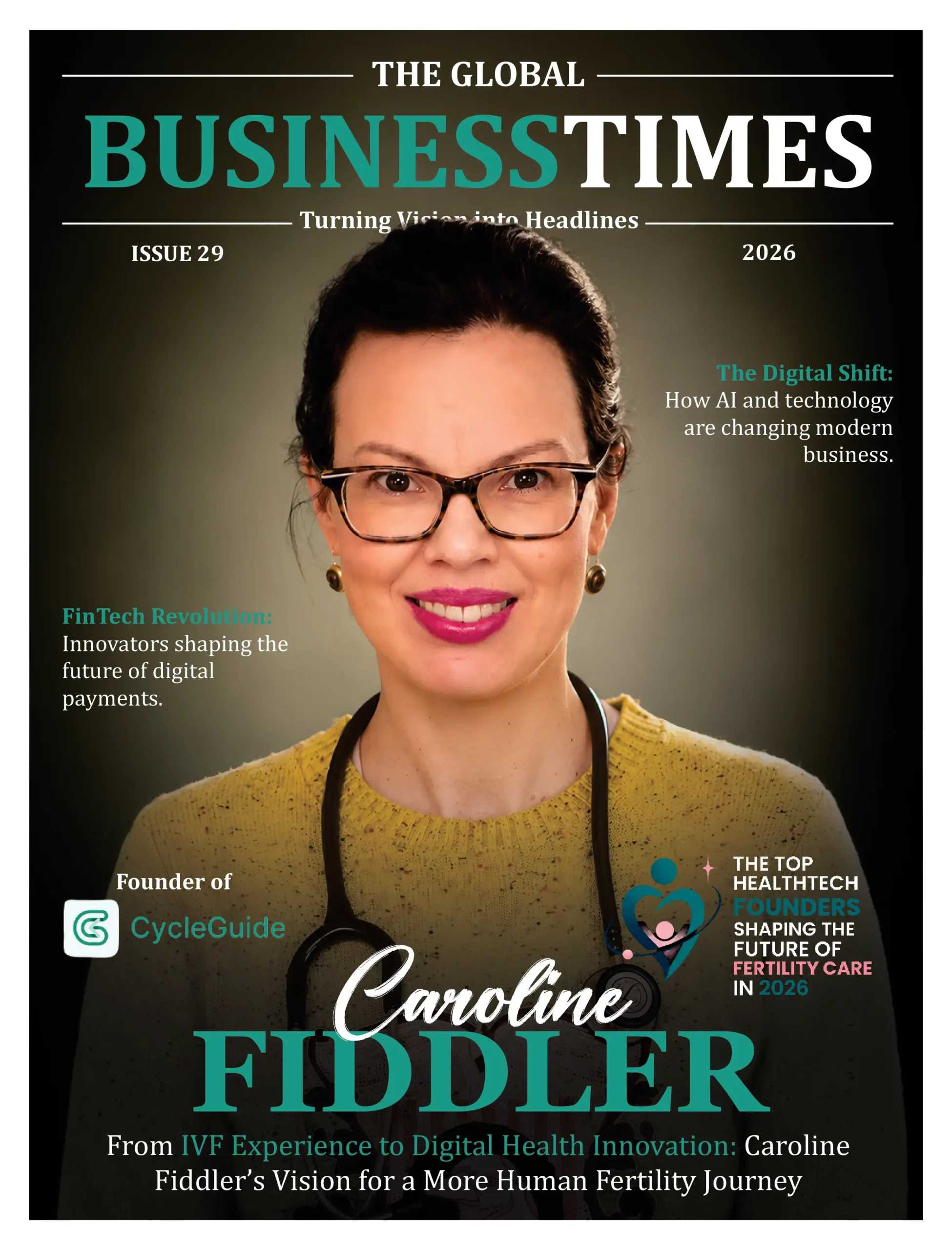
From IVF Experience to Digital Health Innovation: Caroline Fiddler’s Vision for a More Human Fertility Journey
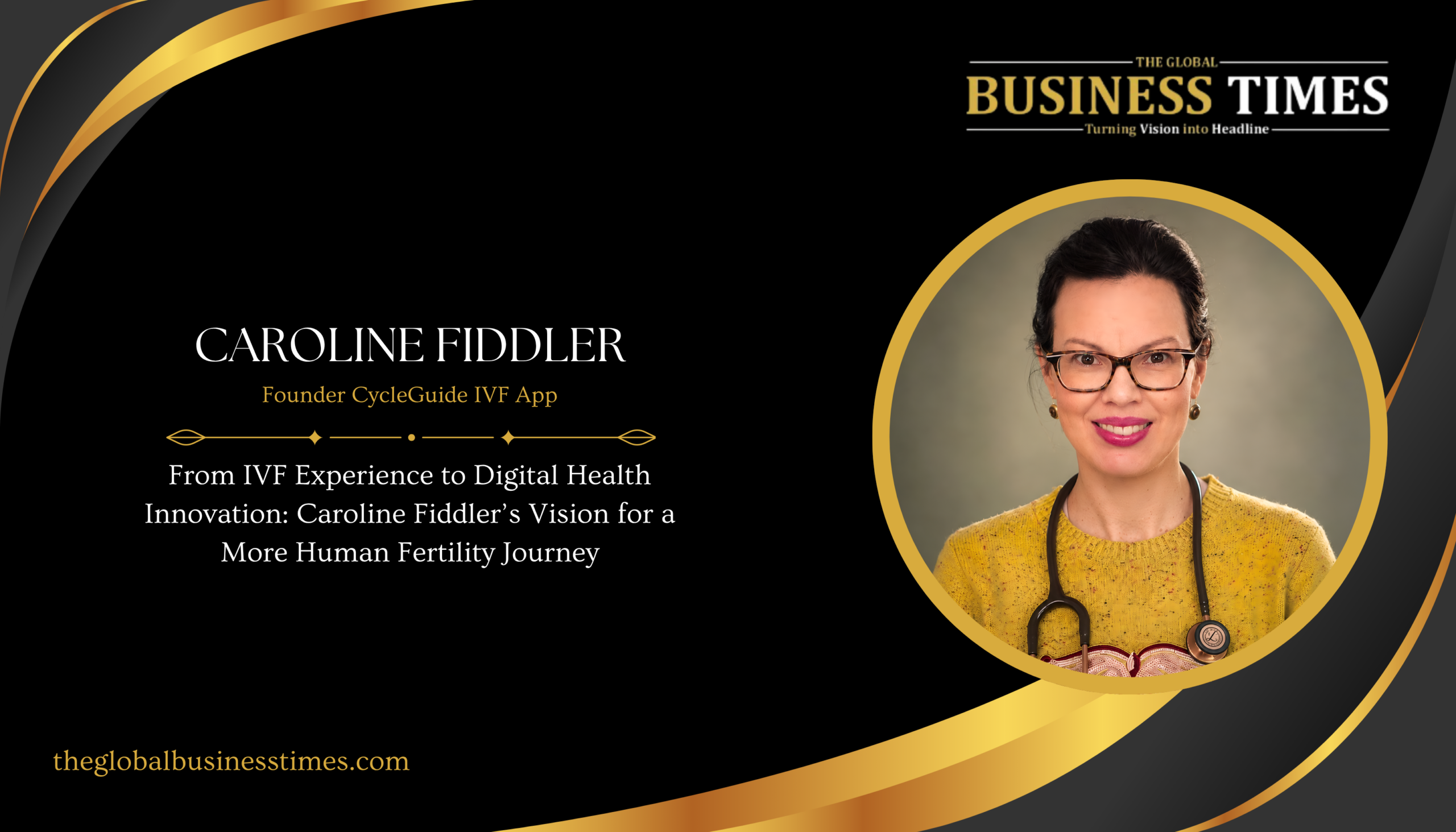
For many patients, an IVF journey is defined by hope, anticipation and the possibility of a long-awaited family. Yet behind those emotions is a highly structured and demanding medical process involving medications, blood tests, ultrasounds, appointments, procedures and instructions that can change with little notice. For Caroline Fiddler, the experience revealed something that her years in medicine had not fully prepared her to understand: the patient is often responsible for carrying an extraordinary amount of the treatment process outside the clinic.
A medical doctor with experience across multiple healthcare environments, Fiddler understood clinical systems from the inside. But becoming an IVF patient gave her an entirely different perspective. It was this intersection of professional knowledge and personal experience that led her to create CycleGuide, a purpose-built digital tool designed to make fertility treatment more organised, understandable and manageable.
Today, Fiddler represents a growing generation of healthcare innovators who are not simply asking how technology can make medicine faster, but how it can make healthcare more human.
When the Doctor Became the Patient
Fiddler’s path into medicine began with a natural fascination with science and a desire to engage directly with people. Medical school offered both intellectual challenge and meaningful patient interaction, and she found much of clinical medicine deeply rewarding.
However, she also encountered the limitations of traditional healthcare environments. Hospital systems could be rigid, hierarchical and difficult to change. Even straightforward suggestions designed to improve workflow could struggle to gain traction.
Her perspective changed profoundly when she experienced IVF herself.
During her first IVF cycles, Fiddler found herself navigating the same complexity faced by countless patients. Treatment instructions were frequently delivered through paper documents and telephone calls. Medication schedules changed according to test results. Appointments and procedures had to be coordinated around work and everyday responsibilities. Important instructions could arrive during a busy moment when writing them down was difficult or impossible.
The experience was particularly striking because she was a doctor.
“If I am overwhelmed deciding if my menstrual flow is sufficiently heavy to designate it Day 1 and hence the start of my cycle,” she reflected, “then how must others feel without a healthcare background?”
The question became the foundation of CycleGuide.
Fiddler realised that fertility treatment was placing a substantial logistical and mental burden on patients, while the systems supporting them had not evolved at the same pace as the medicine itself.
Identifying a Problem Hiding in Plain Sight
IVF treatment often lasts two to three weeks, but its complexity can make those weeks feel considerably longer. Medication instructions may change. Blood tests and ultrasounds determine the next steps. Procedures must be carefully timed. Patients may need to administer injections correctly while simultaneously managing work, family and the emotional uncertainty of treatment.
For Fiddler, traditional paper-based treatment instructions were simply not flexible enough.
A printed table could provide an initial schedule, but it could not easily adapt when treatment changed. Days of the week might not be clearly represented. Additional instructions could not simply be inserted. And when a fertility nurse called with an update, the patient was often expected to record the new information themselves.
The problem was not necessarily a lack of clinical expertise. It was a communication and coordination gap.
Fiddler began imagining a simple digital solution that could supplement existing clinical processes without adding unnecessary complexity. Rather than creating another elaborate health platform, she wanted something that would focus on the practical reality of IVF: what does the patient need to do today, tomorrow and throughout the cycle?
That philosophy became central to CycleGuide.
Designing Around the Patient
CycleGuide was conceived as a simple reminder and treatment-management application specifically designed for fertility treatment.
Its central interface provides a monthly calendar, allowing patients to see an entire treatment cycle at a glance. Below the calendar, users can view the tasks required for the current day and mark them as completed.
The system uses colour-coded categories for key components of treatment, including Day 1, medication, blood tests, ultrasounds, procedures and appointments. Individual tasks can be modified, including medication end dates, reflecting the reality that IVF instructions often change as treatment progresses.
Notifications can help remind patients when tasks need to be completed, while a pre-cycle checklist helps users prepare before treatment begins.
The purpose is not to replace the fertility team. It is to help patients better understand and manage the instructions they have already been given.
Fiddler deliberately resisted the temptation to make CycleGuide increasingly complicated.
During the early development process, she received advice from Jarrod MacFarlane, project manager at Appetiser Apps, that stayed with her: an app should not become complicated simply because more features are possible. Users generally want the basics to work exceptionally well.
That principle became an important leadership lesson.
For Fiddler, simplicity is not a lack of ambition. It is part of good healthcare design.
Two Perspectives, One Purpose
What distinguishes Fiddler’s approach is the way two professional identities coexist within her work.
As a doctor, she understands clinical workflows, healthcare systems and the consequences of inefficient processes. As a patient, she understands what those inefficiencies feel like from the other side.
Her medical career has exposed her to hospitals, pathology laboratories, radiology departments, rehabilitation programs, emergency medicine and radiation oncology, among other environments. Each setting showed her different systems, requirements and shortcomings.
Her experience in radiation oncology was particularly influential.
While working in Perth, Western Australia, she proposed that administrative staff proactively chase pathology and radiology results before new patient appointments. This would allow doctors to focus on understanding the patient and preparing an appropriate treatment plan instead of spending valuable clinical time locating external reports.
The idea was implemented quickly and worked effectively.
For Fiddler, it demonstrated that small improvements in workflow can have a significant impact on both staff and patients.
Years later, her IVF experience brought that lesson into sharper focus.
She began asking how patients were expected to manage complex treatments at home when healthcare systems were still relying heavily on fragmented communication.
Patient-Centred Care Beyond the Consultation Room
Fiddler believes patient-centred care extends well beyond the doctor’s consultation room.
Her experiences across oncology and other areas of medicine showed her that patients must often coordinate treatment themselves. In radiation oncology, for example, patients may attend repeated treatments over weeks or months while simultaneously managing chemotherapy, immunotherapy, surgery, tests and other appointments.
The clinical team may understand the medical pathway, but the patient experiences it as a daily reality.
Fertility treatment presents a similar challenge.
Fiddler believes clinics can provide greater emotional support through improved access to counselling and more accessible educational resources. She would like patients and their partners to have opportunities to understand the menstrual cycle, conception, fertility treatment and the rationale behind different interventions before treatment becomes overwhelming.
She also believes emotional support should be available outside conventional office hours. Anxiety does not follow a clinic timetable, and patients can experience fear, uncertainty and distress at any time.
Technology, in her view, should therefore be designed not only around clinical efficiency but around the lived experience of patients.
The Next Generation of Fertility Technology
Fiddler sees significant potential in the convergence of fertility medicine, digital health and artificial intelligence.
AI is already being used in areas such as ultrasound assessment and embryo evaluation, and she expects its role to grow. AI-powered documentation and clinical letter generation may also reduce administrative workloads for healthcare professionals.
Yet she believes technology should solve practical problems rather than exist simply because it is technologically possible.
Her vision involves fertility-specific electronic medical records, patient-facing applications and real-time communication between clinics and patients. Rather than asking patients to rely on memory or hurried handwritten notes, clinics could send updated instructions directly to a patient’s phone.
The result would be a more connected ecosystem involving patients, partners, nurses, doctors and clinic systems.
At the same time, Fiddler is clear that technological progress must not come at the expense of privacy. Fertility information is deeply personal, and the integrity and security of patient data must remain fundamental.
A Milestone of International Recognition
In 2026, Fiddler’s work received significant international recognition when CycleGuide was shortlisted for the European Fertility Society’s Fertility Care Awards in London during the annual ESHRE conference.
CycleGuide was shortlisted in the Best Treatment Support and Coordination Service category.
For Fiddler, the recognition was meaningful because it validated more than the application itself. It validated the problem she had identified.
After years of explaining to clinics why existing communication processes could be improved, being recognised by an international fertility-focused organisation and global judging panel represented an important confirmation that the idea had relevance beyond her personal experience.
It demonstrated that a solution born from one patient’s frustration could address a broader challenge in fertility care.
Building for a Global Future
CycleGuide’s next chapter is ambitious.
Fiddler aims to expand beyond Australia and New Zealand, with the United Kingdom and United States already part of the growth strategy. Singapore and Canada are also among the markets she hopes to explore, with a long-term ambition to make the platform available globally and in multiple languages.
Integration is another major priority.
The standalone application allows patients and clinic staff to experience CycleGuide independently, while the integrated model is designed to allow clinics to provide treatment instructions directly to patients.
Fiddler also envisions a white-label version that can carry a clinic’s own branding, creating a seamless extension of the existing patient experience.
Her ambitions extend beyond fertility. Drawing on her experience in radiation oncology, she sees potential for CycleGuide’s principles to support cancer treatment, another area where patients face complex schedules, significant anxiety and substantial responsibility outside the hospital.
Ultimately, she wants the technology to help people undergoing fertility treatment wherever they are, including patients travelling internationally and intended parents pursuing conception through surrogacy.
A More Connected Healthcare System
Fiddler’s vision extends beyond her own company.
She believes healthcare needs greater integration, particularly between electronic medical record systems. In some regions, hospitals still rely on paper records, while institutions using electronic systems may operate on platforms that cannot communicate effectively with one another.
For patients moving between healthcare providers, this can mean that critical information is unavailable when it is needed most.
A more connected system could reduce duplication, treatment delays and administrative burden while improving continuity of care and reducing pressure on healthcare professionals.
For Fiddler, integration is ultimately about putting the patient back at the centre of the system.
“There Must Be a Better Way”
Perhaps the most revealing part of Caroline Fiddler’s journey is that CycleGuide was never created from a traditional technology background.
It began with frustration, lived experience and a conviction that something could be improved.
Building a health-tech company has not been easy. Fiddler has experienced enthusiastic clinics that later withdrew, unanswered emails and the uncertainty that comes with moving from the relative security of medicine into entrepreneurship.
Yet those experiences have strengthened rather than diminished her belief in the idea.
Her advice to others considering turning a personal experience into meaningful change is simple: have a go.
She admits that if she had understood beforehand how difficult developing, promoting and establishing an app would be, she might never have started.
Fortunately, she did not know.
That willingness to begin before having all the answers became an advantage.
Fiddler continues to return to a simple philosophy: “There must be a better way.”
It is a philosophy that captures both her medical career and her entrepreneurial journey.
CycleGuide is not an attempt to reinvent fertility medicine. It is an attempt to improve one important part of the journey: helping patients understand what they need to do, when they need to do it, and giving them a greater sense of control during a period when so much can feel uncertain.
By bringing together clinical knowledge, lived IVF experience and digital innovation, Caroline Fiddler is demonstrating what patient-centred health technology can look like when it begins with empathy rather than complexity.
Her journey is ultimately about more than an app. It is about challenging systems that have become unnecessarily difficult, listening closely to the people who use them and having the courage to believe that healthcare can work better.
And for the patients navigating one of the most emotionally demanding journeys of their lives, that belief can make a meaningful difference.