

Hanif Shaikh: Bridging Global Markets, Empowering Talent, and Redefining Multi-Sector Leadership
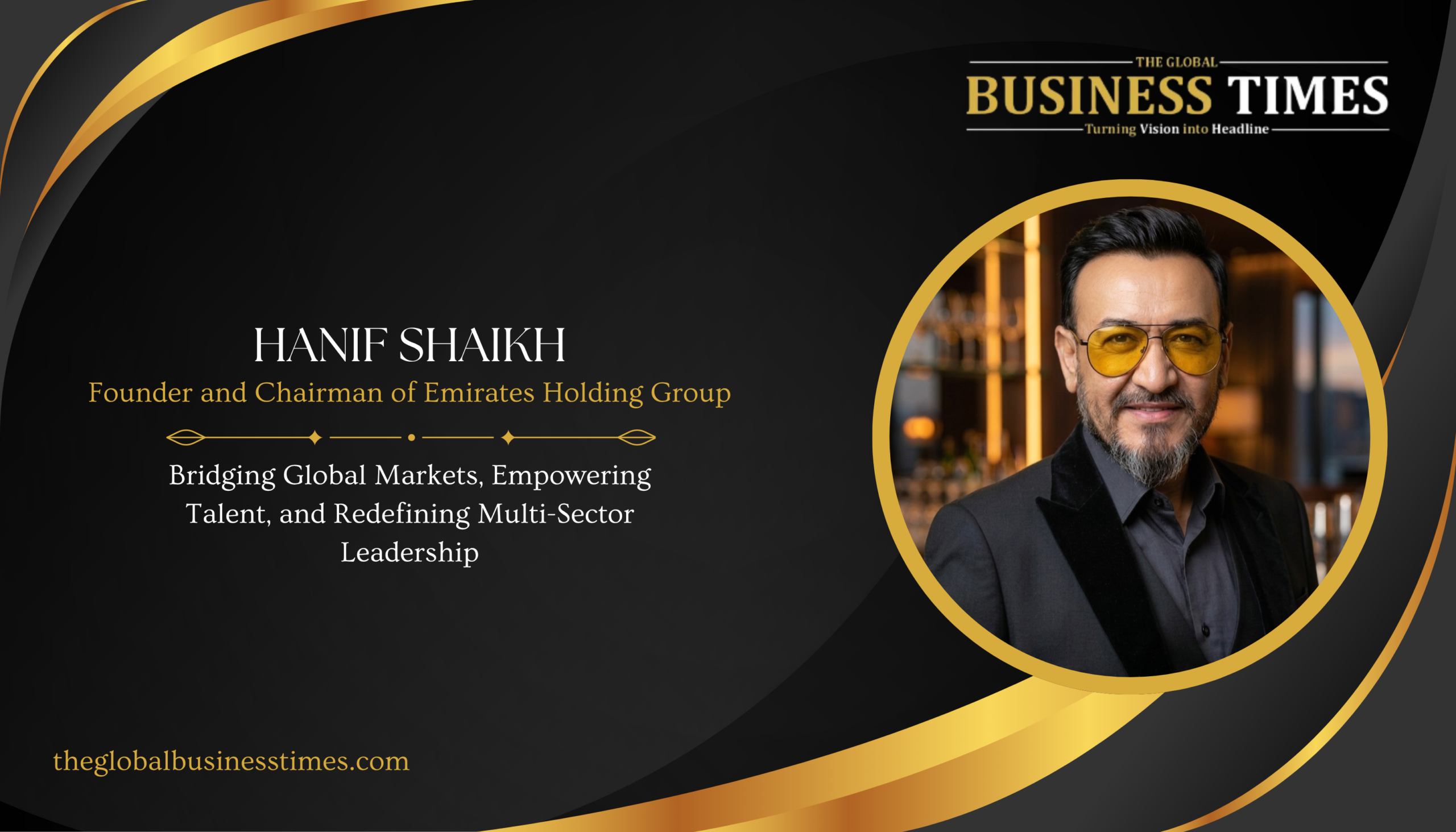
From Foundations in Mumbai to Global Infrastructure: A Visionary’s Evolution
The modern international landscape operates across complex, high-stakes trade networks where economic agility and strategic diversification dictate sustainable growth. Today, as the Founder and Chairman of Emirates Holding Group (and United Group), Hanif Shaikh stands at the center of a dynamic operational footprint spanning the Middle East, Africa, South Asia, and Europe. His leadership perspective has been forged across more than two decades of cross-border development, sovereign trade, and large-scale project execution.
Yet, Shaikh’s journey did not start in the high-rise executive suites of Dubai. Grounded in his roots in Mumbai where he earned his MBA in Marketing at the University of Mumbai his early career was defined by hands-on execution across Saudi Arabia and Oman. Navigating diverse regional business environments installed in him an early appreciation for operational discipline, cross-cultural diplomacy, and market agility.
Taking a pivotal step in 2005, Shaikh established Emirates Holding Group in the UAE. Driven by a core philosophy that true success is measured by value creation and human empowerment, he systematically built a global consortium spanning energy, commodities, digital assets, events, real estate, and consumer goods. His evolution from an ambitious marketer to a global chairman reflects a continuous balance between strategic foresight and ground-level execution.
The Core Philosophy: People, Value Creation, and Purpose-Driven Impact
Guiding a multi-faceted conglomerate for over two decades requires more than opportunistic expansion; it demands a clear, unyielding business framework. Across every division of Emirates Holding Group, Shaikh operates on core leadership pillars:
- Trust and Integrity: Long-term international alliances endure market volatility only when anchored by operational transparency and mutual respect.
- Empowerment and Mentorship: Sustainable growth occurs when organizations actively nurture young talent, foster entrepreneurial drive, and support inclusive opportunities.
- Agility and Innovation: Continuous diversification from physical commodity trading to digital fintech integration ensures long-term resilience across economic cycles.
From these foundational tenets, Shaikh cemented a guiding business principle: Success is not measured solely by enterprise balance sheets, but by the lives empowered and the long-term value delivered to global communities.
The Conglomerate Ecosystem: A 360-Degree Operational Blueprint
To address critical infrastructure gaps, energy demands, and commercial trade corridors, Shaikh structured Emirates Holding Group into a multi-sector powerhouse capable of managing end-to-end global projects.
[ EMIRATES HOLDING GROUP ]
[ Energy & Commodities ] [ Capital & Trading ] [ Lifestyle & Media ]
- Oil & Gas (Fuel/Base) • Project Funding • Emirates Luxury Show
- Gold & Diamond Mining • General Trading • Fashion & Film
- EPC & Infrastructure • Fintech & Crypto • Real Estate & Awards
Strategic Sector Footprint
|
Sector |
Core Focus & Operational Activities |
Key Growth Regions |
|
Energy & Infrastructure |
Trading fuel oil, base oil, chemicals, fire protection coatings, and large-scale EPC contracts. |
Middle East, Africa, CIS |
|
Commodities & Mining |
Gold mining, ore processing, and raw diamond and semi-precious stone trading. |
Africa, South Asia |
|
Luxury, Events & Media |
Curating high-profile international platforms, including the Emirates Luxury Show, Emirates Business Awards, and global fashion showcases. |
Dubai, Europe, GCC |
|
Fintech & Digital Trade |
Strategic alliances and equity investments in digital payment networks (e.g., Pezon via Rose Merc Ltd.) and e-commerce infrastructure. |
India, UAE, Global |
Structural Drivers Shaping Global Commerce and Trade
As global markets shift under geopolitical changes, energy transitions, and rapid digitization, Shaikh identifies five major structural trends redefining global enterprise:
- Trade Route Decentralization: Emerging corridors across Africa, South Asia, and the Middle East are creating vital trade hubs that complement traditional East-West channels.
- Integration of Physical and Digital Assets: Commodity trading and supply chains are rapidly integrating with fintech ecosystems, digital asset platforms, and real-time payment solutions.
- Synergy Between Business and Entertainment: Global platforms that combine business excellence, luxury lifestyle, media coverage, and award recognition serve as powerful catalysts for cross-border investment.
- Demand for Strategic Project Funding: Infrastructure projects in developing regions require flexible capital, public-private partnerships (PPP), and strategic mentorship to succeed.
- Sustainable & Socially Responsible Growth: Environmental governance, local empowerment, and corporate philanthropy are transitioning from corporate social responsibility metrics into central drivers of long-term enterprise value.
Strategic Alliances: Expanding Global Horizons
A defining hallmark of Shaikh’s leadership is his capability to forge high-impact strategic partnerships connecting emerging markets with global capital centers.
Through strategic collaborations with listed entities (such as Rose Merc Ltd.), media networks, and international trade bodies, Emirates Holding Group continues to launch major global initiatives such as the Emirates Luxury Show, Emirates Real Estate Awards, and regional business conclaves. By convening developers, government dignitaries, creative visionaries, and institutional investors on shared stages in Dubai, London, and beyond, Shaikh turns localized opportunities into international growth platforms.
“Every act of goodness is charity even if it is just a smile.”
Guided by a commitment to giving back, Shaikh balances large-scale industrial projects with active philanthropy, supporting youth skills development, community initiatives, and international cultural exchange.
The Operational Playbook: Scaling Diversified Enterprises
Managing operations across disparate sectors requires a clear execution framework to maintain quality and reliability as the enterprise scales:
- Standardization Across Subsidiaries: Implementing uniform operational standards across international offices in Dubai, Africa, South Asia, and Europe.
- Phased Ecosystem Growth: Matching physical infrastructure investments directly with market demand and verified trade corridors.
- High Cultural Intelligence: Respecting regional market nuances while upholding global governance standards.
- Transparent Communication: Relying on open, continuous dialogue across decentralized management teams to ensure operational alignment.
A Strategic Roadmap for Emerging Founders and Industry Leaders
For entrepreneurs and rising executive leaders entering dynamic global markets, Shaikh offers a practical blueprint for long-term impact:
- Build Ground-Up Operational Knowledge: True leadership requires understanding both high-level financial strategy and the practical realities of daily operations.
- Diversify with Strategic Purpose: Expand into complementary sectors where your core operational competencies add distinct value.
- Prioritize People and Partnerships: Enterprise success relies on the strength of your network, the trust of your partners, and the dedication of the teams you empower.
The Vision Ahead: Charting the Next Era of Global Enterprise
Looking toward the future, global trade will demand greater adaptability, dynamic capital deployment, and unified international networks. As supply chains and digital economies evolve, diversification remains key to long-term stability.
Emirates Holding Group’s vision centers on expanding its footprint across new real estate developments, energy ventures, and international luxury and business platforms across the Middle East, Europe, and Asia. Driven by innovation, operational excellence, and a commitment to community empowerment, Hanif Shaikh continues to shape his legacy not merely as a conglomerate leader, but as a global architect of interconnected commerce, culture, and opportunity. Through strategic expansion, forward-thinking investments, and a strong focus on sustainable value creation, he aims to build an enterprise that transcends industries and borders, creating lasting impact for partners, communities, and future generations.