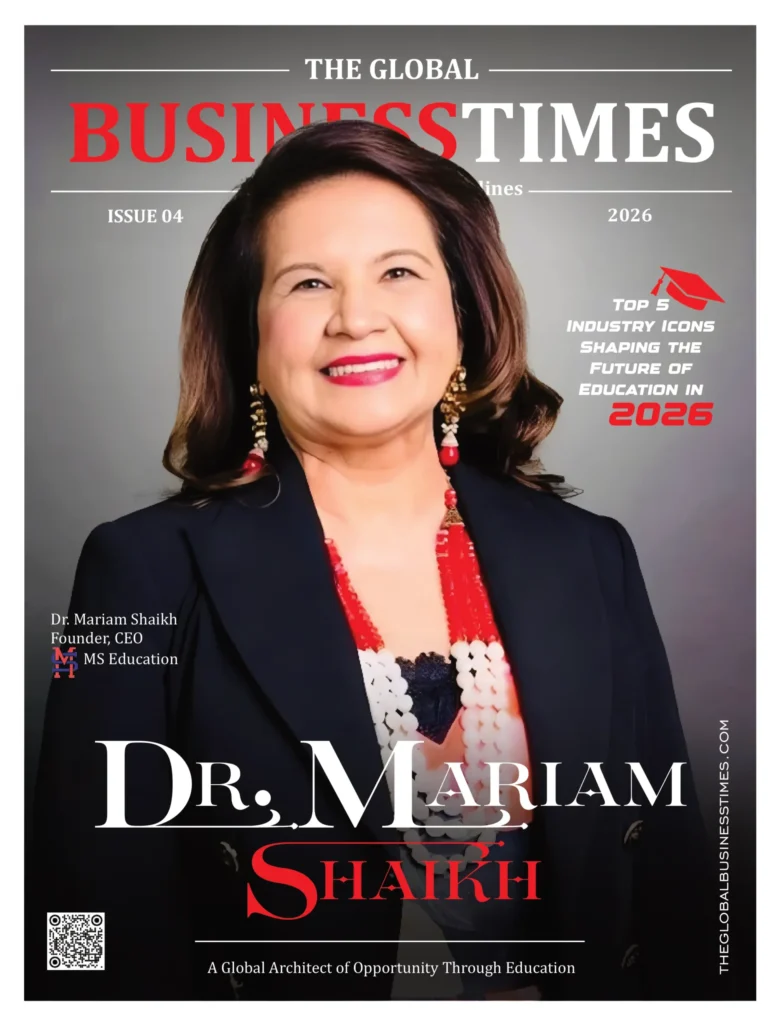


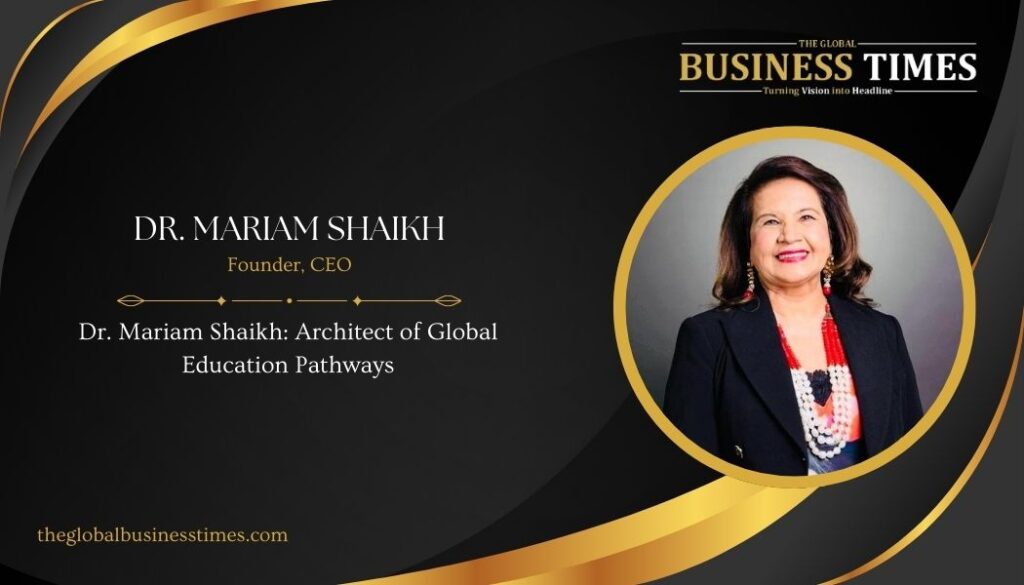
Dr. Mariam Shaikh: Architect of Global Education Pathways
Dr. Mariam Shaikh: Architect of Global Education Pathways Redefining Leadership, Legacy, and the Future of International Education In a region defined by ambition, transformation, and global connectivity, few leaders have shaped the education landscape as profoundly and persistently as Dr. Mariam Shaikh. With more than three and a half decades of experience spanning early childhood education, K–12 leadership, higher education start-ups, international university partnerships, and global student mobility, Dr. Shaikh stands as a cornerstone of the UAE’s rise as a global education hub. Today, as the Founder and CEO of MS Education, Dr. Mariam Shaikh continues to influence the future of education bridging continents, cultures, and institutions while empowering students from over 100 nationalities to pursue global opportunities. Her journey is not merely one of professional milestones; it is a story of vision, resilience, and an unwavering belief in education as a transformative force. A Journey Rooted in Purpose Dr. Mariam Shaikh’s journey in education began long before global rankings, international branch campuses, and education cities became common terminology in the Middle East. In the early 1980s, driven by a passion for learning and child development, she founded her own preschool in the UAE. At a time when the region’s formal education ecosystem was still evolving, her initiative reflected both foresight and courage. Her early work laid the foundation for a career defined by student-centric leadership. As she progressed to head a well-known school group as Principal, Dr. Mariam became the driving force behind its exponential growth. Under her leadership, the institution expanded to serve over 7,000 students, becoming one of the largest Asian schools in the UAE at the time. More importantly, it became a model of academic excellence, operational scale, and community trust. This period marked the emergence of Dr. Mariam’s defining leadership trait: the ability to combine strategic growth with educational integrity. Pioneering Higher Education in Dubai The early 2000s represented a turning point not only in Dr. Mariam’s career but also in the UAE’s education narrative. As Dubai embarked on its journey to become an international education destination, Dr. Mariam transitioned into the higher education sector at a formative stage of its development. One of her most pioneering achievements was playing a central role in establishing one of the first overseas university branch campuses in Dubai for the University of New Brunswick, Canada. This initiative was groundbreaking, setting a precedent for international universities seeking to establish a presence in the region. Her success in this endeavor led to senior leadership roles with some of the most respected international institutions operating in the UAE, including: Canadian University of Dubai Heriot-Watt University Dubai Campus Amity University Dubai Across these institutions, Dr. Mariam was instrumental in start-up operations, student recruitment strategies, international branding, and long-term growth planning. She led the expansion of student populations at scale, contributing directly to the transition from initial academic centers to fully-fledged campuses with comprehensive facilities. Her work helped redefine Dubai’s reputation from a regional education destination to a globally competitive higher education ecosystem. A Global Connector of Institutions Beyond campus development, Dr. Mariam Shaikh emerged as a trusted architect of international academic partnerships. She facilitated articulation agreements and strategic collaborations between institutions in the UAE and universities across: Europe Canada The United States Australia China These partnerships opened pathways for student exchange, study-abroad programs, dual degrees, and joint academic initiatives providing students with global exposure while strengthening institutional credibility. Her leadership extended into experiential learning as well. Dr. Mariam hosted multiple global business challenge competitions, bringing international students to the UAE and positioning the country as a center for innovation, enterprise, and cross-cultural collaboration. She was also among the first education leaders to actively support and operationalize the “Study in Dubai” initiative, successfully recruiting 120 Chinese students to pursue higher education in the emirate well ahead of large-scale international recruitment trends. The Birth of MS Education In 2020, drawing upon decades of experience and an unparalleled network across education, government, and industry, Dr. Mariam Shaikh founded MS Education in the United Arab Emirates. The firm was established with a clear mission: to empower students and institutions with access to global opportunities through expert guidance, innovation, and collaboration. Today, MS Education stands as a premier education advisory firm, offering specialized services including: Student recruitment and international partnerships New education entity and campus set-up advisory Institutional marketing, branding, and market-entry strategy University and career fairs, alumni engagement initiatives Innovative learning and professional training programs Entrepreneurial initiatives and internship facilitation UAE cultural awareness and global exchange programs Under Dr. Mariam’s leadership, the firm has become a trusted partner for universities, colleges, training institutes, and corporate organizations across the UAE, GCC, and beyond. Strategic Global Representation Dr. Mariam’s influence through MS Education extends well beyond advisory services. Since 2021, she has served as the Middle East Strategist for the University of Guelph (Canada), significantly expanding student outreach and institutional partnerships across the UAE and GCC. In 2023, MS Education was appointed as the Middle East Regional Representative for Toronto Metropolitan University (formerly Ryerson University), supporting student recruitment and regional engagement. Most recently, the firm has been: Appointed to facilitate the start-up of a new Canadian education entity in Dubai Designated as the official UAE representative for Kean University, New Jersey, USA, a nationally ranked R2 Carnegie Research institution recognized for its extensive research portfolio These appointments underscore Dr. Mariam’s credibility as a global education strategist and her ability to align international institutions with regional priorities. Championing Students and Diversity At the heart of Dr. Mariam Shaikh’s career lies an unwavering commitment to students. Over the years, she has worked closely with learners from more than 100 nationalities, guiding them through academic decisions that shape not only careers, but lives. Her approach goes beyond admissions and placements. She is deeply invested in: Student experience and well-being Cultural integration and belonging Career readiness and global employability Her advocacy also extends to social impact. Dr. Mariam has supported CSR initiatives with UNHCR, helping provide scholarships for refugee students ensuring
Dr. Mariam Shaikh: Architect of Global Education Pathways Read More »