

Ahmed Detta: Building a Scalable Circular Economy Through Innovation and Execution
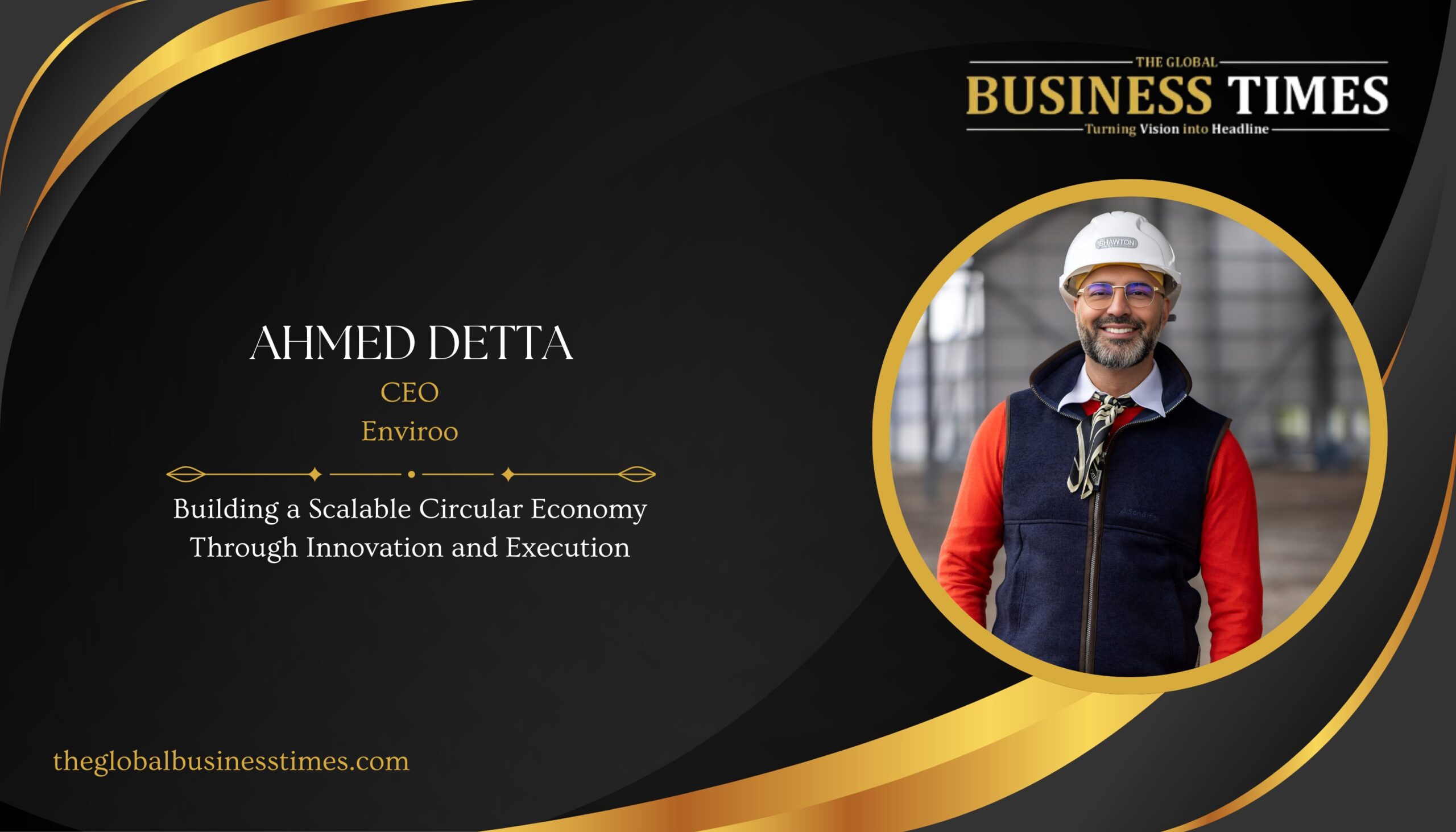
With more than 15 years of experience across the UK and the Middle East, Ahmed Detta has built a career defined by action, execution, and a relentless focus on solving one of the most pressing challenges of our time: how to transform waste into value at scale.
Throughout his journey, Ahmed observed a recurring pattern across industries and geographies. Conversations around sustainability and waste management were increasing, yet meaningful infrastructure to address these challenges remained limited. While awareness campaigns, policy discussions, and corporate commitments were gaining momentum, the systems required to convert waste into reusable resources were often fragmented or insufficient.
This gap between ambition and execution became the defining motivation behind his work. Rather than contributing to the conversation alone, Ahmed chose to focus on building tangible, scalable solutions that could deliver measurable outcomes. His philosophy is rooted in practicality, where sustainability is not just an idea, but a system that must function efficiently, consistently, and commercially.
From Observation to Purpose
Ahmed’s early experiences across recycling, sustainability, and related technologies shaped his understanding of the sector’s structural challenges. Working in both mature and emerging markets, he gained firsthand exposure to the complexities of waste management systems, supply chains, and regulatory frameworks.
Over time, one insight became increasingly clear. Waste was not inherently the problem. The real issue lay in the absence of systems capable of capturing, processing, and reintegrating materials back into the economy. This realization shifted his perspective from managing waste to designing circular systems.
His decision to step into the circular economy space was therefore not driven by trends, but by a clear recognition of opportunity. By building infrastructure that could close the loop, he saw the potential to create both environmental and economic value at scale.
Leading Enviroo’s Mission
As the CEO of Enviroo, Ahmed is leading a mission to fundamentally reshape the UK’s recycling landscape. The company’s primary focus is to close the country’s recycling capacity gap while establishing a circular model that is both measurable and commercially viable.
At the core of Enviroo’s strategy is PET plastic, a material widely used in food and beverage packaging. While PET is highly recyclable, the effectiveness of recycling depends heavily on the systems in place. When properly designed, these systems can convert used plastic back into food-grade material, significantly reducing the need for virgin resources.
Enviroo’s work revolves around strengthening three critical pillars: capture, quality, and traceability. By improving how materials are collected, ensuring consistent input quality, and enabling full transparency across the recycling process, the company is building a model that can sustain long-term circularity.
Building Infrastructure That Matters
A defining milestone in Ahmed’s journey is the development of an advanced PET bottle-to-bottle recycling facility at Protos Park in Ellesmere Port. This project represents a major step forward in addressing the UK’s recycling challenges.
Designed to process up to 35,000 tonnes of plastic annually, the facility is expected to become operational in 2027. More than 30,000 tonnes of recyclable PET will be converted into certified food-grade material, enabling its reuse in new beverage packaging.
The significance of this project goes beyond capacity. It represents a shift toward building domestic infrastructure that reduces reliance on external processing. For Ahmed, this is a critical step in creating a resilient and self-sufficient system where recycling is managed within the country rather than outsourced.
By focusing on high-quality output and scalable operations, the facility aims to demonstrate that circular economy models can work effectively at an industrial level. It is not just about recycling more, but about recycling better.
Navigating Complex Challenges
Building large-scale recycling infrastructure is a complex undertaking that requires alignment across multiple domains. Policy, capital investment, engineering, and supply chains must all come together for a project to succeed.
Ahmed emphasizes that such initiatives cannot rely on vision alone. They require structured planning, disciplined execution, and continuous risk management. Each stage of the project has been carefully de-risked, from validating market demand to securing reliable feedstock and establishing strong commercial partnerships.
Collaboration has played a key role in this process. Working with RECOUP has provided valuable insights into policy and market dynamics, while partnerships such as Clearpoint have supported material supply and investment. These combined efforts have helped transform the project into a credible and scalable reality.
Redefining Sustainability
One of Ahmed’s core beliefs is that sustainability and profitability are not opposing forces. In fact, he argues that sustainability can only be sustained when it is commercially viable.
This perspective challenges traditional narratives that position environmental responsibility as a cost rather than an opportunity. At Enviroo, the focus is on building a business model that delivers both environmental impact and financial performance.
Achieving this balance requires consistency across the value chain. Reliable input materials, high-quality output, and disciplined operations are essential components of a successful recycling system. Without these elements, even the most well-intentioned initiatives struggle to scale.
The regulatory landscape in the UK is also evolving rapidly. Initiatives such as the Deposit Return Scheme, Extended Producer Responsibility, and Simpler Recycling reforms are shaping the future of the industry. These policies are creating a more structured environment where businesses that can deliver high-quality recycled materials at scale will have a competitive advantage.
Influencing Policy and Industry
In addition to his role at Enviroo, Ahmed contributes to the broader recycling ecosystem as a Board Trustee at RECOUP.
This position allows him to bring a practical perspective to policy discussions, ensuring that strategies are grounded in real-world implementation. His focus is on addressing the key requirements for building effective recycling systems, from food-grade processing standards to infrastructure development.
By bridging the gap between policy and execution, Ahmed is helping to shape a more realistic and impactful approach to circular economy development. His involvement ensures that industry conversations move beyond theory and focus on what is required to deliver results in practice.
Learning from Global Experience
Ahmed’s international experience has been instrumental in shaping his approach to sustainability and innovation. Working across the UK and the Middle East has exposed him to diverse regulatory environments, consumer behaviors, and market conditions.
One of the key lessons from this experience is that circular solutions cannot be replicated without adaptation. Each market requires a tailored approach that reflects its unique characteristics.
His work on PET recycling initiatives in the UAE reinforced the importance of aligning infrastructure, economics, and behavior. When these elements work together, circular systems can thrive. When they do not, even well-designed solutions struggle to succeed.
This understanding continues to guide his approach, ensuring that Enviroo’s strategies are grounded in local realities while maintaining global relevance.
The Role of Collaboration
Collaboration is a central theme in Ahmed’s work. Building a circular economy requires coordinated efforts across governments, corporations, and communities.
Enviroo actively works with industry bodies, commercial partners, and policymakers to drive progress. These partnerships are essential for addressing the complexities of recycling systems and ensuring alignment across the value chain.
At the same time, Ahmed places significant importance on community engagement. Local communities play a crucial role in the success of recycling systems. When people understand the benefits of recycling in terms of job creation, investment, and environmental impact, participation increases.
This collective effort strengthens the entire system, creating a more sustainable and inclusive model for the future.
Trends Shaping the Future
Looking ahead, Ahmed identifies several key trends that will shape the future of plastic recycling and the global circular economy.
The first is the growing importance of domestic reprocessing capacity. As countries seek to build more resilient systems, reliance on external processing is expected to decrease. This shift will drive investment in local infrastructure and create new opportunities for innovation.
The second trend is the increasing influence of policy. Regulations such as the Deposit Return Scheme and Extended Producer Responsibility are playing a critical role in shaping market behavior. These frameworks are encouraging greater accountability and driving improvements in recycling systems.
The third trend is the rising demand for traceability, quality, and compliance. As brands and regulators seek greater transparency, the ability to track and verify recycled materials will become increasingly important. This will require advanced systems and technologies that ensure accuracy and accountability across the value chain.
Driving Awareness and Change
Beyond his operational responsibilities, Ahmed is actively involved in raising awareness and driving industry conversations. Through speaking engagements, media contributions, and initiatives such as the Circularity Series, he is working to make the sustainability conversation more practical and transparent.
He believes that recycling must be understood as an industrial and commercial challenge, not just a policy objective or branding exercise. By highlighting real-world constraints and opportunities, he aims to encourage more informed and effective action across the sector.
Advice for Entrepreneurs
For aspiring entrepreneurs looking to build businesses in sustainability and climate technology, Ahmed offers clear and pragmatic advice.
Focus on solving real problems rather than chasing trends. While the sector is filled with ambitious ideas, long-term success depends on execution. Understanding regulatory frameworks, managing financial performance, and addressing genuine market needs are essential.
Being mission-driven provides direction, but it is commercial discipline that ensures sustainability. Businesses that can combine purpose with performance are best positioned to create lasting impact.
A Vision for the Future
Looking ahead, Ahmed’s vision for Enviroo is both ambitious and grounded. He aims to close the UK’s recycling capacity gap while establishing a circular model that can be trusted, scaled, and replicated.
The goal extends beyond a single project. It is about building a system where PET is collected, processed, and reused efficiently within the UK. A system that is transparent, commercially sound, and capable of delivering consistent results.
Ultimately, Ahmed envisions a future where the circular economy is no longer an aspiration or a policy framework, but a fully functioning reality. A system where waste is transformed into value, resources are used efficiently, and sustainability becomes an integral part of everyday operations.
Through his work, he is not just contributing to this future. He is actively building it.