

Prof. Dr. Daniel F. à Wengen: The Surgeon Who Gave the World a Freer Breath and a Clearer Sound
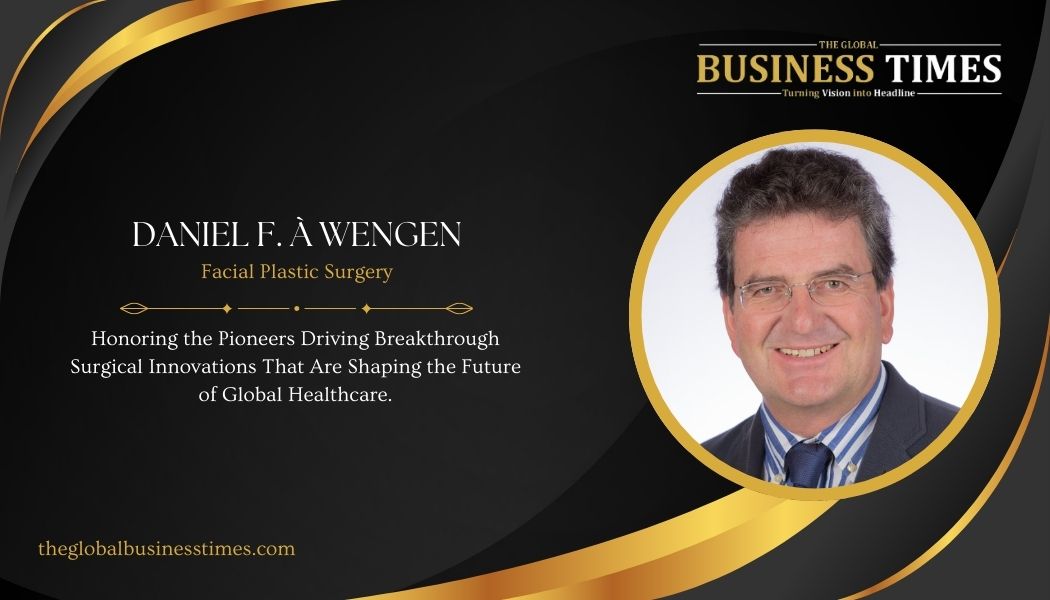
“Air is life and breathing is freedom.”
For Prof. Dr. Daniel F. à Wengen, those words are not simply poetic, they are the foundation of a lifelong mission. Over several decades, the Swiss facial plastic and otologic surgeon has transformed how medicine approaches two of the most fundamental functions of human life: breathing and hearing. Through pioneering implants, meticulous surgical techniques, and a relentless commitment to innovation, he has given thousands of patients something many people never think about until it is lost, the ability to breathe and hear with ease.
Today, more than ten thousand people around the world live with his Titanium Breathe Implant, while many more benefit from middle ear prostheses and concepts that grew out of his early work on hearing implants. Yet behind this impressive record of patents, surgical techniques, and international recognition stands a physician who, above all, measures success in quiet, deeply personal moments. It is the patient who finally sleeps through the night without snoring, the individual who can walk up a flight of stairs without struggling for air, or the person who hears a loved one clearly again. Those are the outcomes that truly define his legacy.
From Basel to California: A Career Forged in Curiosity and Courage
Prof. à Wengen’s story begins in Switzerland, at the University of Basel and the University Hospital of Basel, where he completed his specialist training in otorhinolaryngology. Very early in his career, he realised that he was not content to simply apply existing techniques. He was drawn to the unknown frontiers of his specialty, where anatomy, physics, and technology intersect, and where completely new solutions could be engineered for long standing medical problems.
After his initial specialist training, he undertook a surgical fellowship at the University of Davis Medical Center in Sacramento, California, from 1991 to 1992. There, he refined his manual skills and deepened his understanding of complex head and neck as well as skullbase procedures. This period strengthened his conviction that truly outstanding surgery demands both technical mastery and a profound respect for anatomy.
The real turning point, however, came with a generous research grant from the Swiss National Science Foundation, which allowed him to spend 1992 to 1993 as an Otologic Fellow at Stanford University in Palo Alto. At Stanford, he joined a cutting edge research laboratory focused on implantable hearing aids, led by Professor Dick Goode. Rather than working on incremental improvements to existing hearing aids, this group was exploring the radical idea of directly driving the structures of the middle ear.
Immersed in this environment, Prof. à Wengen started a new research program and helped to develop a new type of middle ear implant that bypassed the limitations of conventional acoustic hearing aids. By transmitting sound energy directly to the hearing structures of the middle ear, this implant provided far superior sound quality and clarity. This pioneering work eventually contributed to the development of the Vibrant Soundbridge, which is today regarded as the most successful middle ear implant in the world. It also became the core topic of his academic thesis, and a contribution he remains deeply proud of.
Following his time in California, he returned to Switzerland to pursue further top level otologic training at the University Hospital Zurich under Professor Ugo Fisch, one of the most respected names in ear surgery. This cemented his expertise in otologic and skull base procedures and prepared him for the broader vision that would define his later career.
Back at the University Hospital of Basel, his focus gradually expanded. What began as a deep engagement with otologic surgery naturally evolved into a growing fascination with
rhinoplasty and aesthetic, yet functional, nasal surgery. Instead of choosing between ear or nose, functional or aesthetic work, he chose to master all of them. That choice required courage and years of dedication, but it became one of the defining strengths of his career.
Refusing Limits and Accepting the Cost of Innovation
Throughout this journey, Prof. à Wengen consistently refused to let himself be confined by established boundaries. Whether in otologic implants or functional and aesthetic nasal surgery, he pushed himself to question assumptions, challenge conventional wisdom, and design better solutions for patients.
“I never allowed myself to be limited in any of my areas of interest,” he reflects. “It took a great deal of courage to push boundaries and develop new surgical techniques, implants, and instruments.”
That courage always came with risk. Innovators in medicine must accept not only the possibility of technical failure, but also the social risk of misunderstanding, criticism, and sometimes ridicule. Many of his ideas and techniques were so far ahead of general practice that colleagues struggled to accept them. He experienced resistance, scepticism, and even active obstruction from some peers. One of the hardest lessons of his career has been that innovation often needs around twenty years before it is fully accepted in the field.
Despite this, he persisted. He remained guided by logic, anatomy, patient benefit, and long term clinical outcomes rather than short term popularity. That decision, repeated over decades, laid the foundation for the contributions that now define his name.
ORL Center Basel: A Home for High End Surgery of Nose, Face, and Ear
As the founder and lead surgeon of the ORL Center in Basel, Prof. à Wengen has created a practice that reflects his philosophy in every detail. The center is dedicated to high end
functional and aesthetic surgery of the nose, face, and ear, three areas that are anatomically distinct and technically demanding, yet deeply interconnected in everyday function.
For him, true excellence in surgery begins with knowledge. A deep understanding of human anatomy forms the basis of every operation. From there, a three dimensional way of thinking allows the surgeon to visualise structures, plan precise interventions, and anticipate how each manoeuvre will affect the final functional and aesthetic outcome. Manual dexterity, while essential, is only one aspect of a much larger mental and conceptual framework.
On the technical side, his philosophy is that surgical techniques must never remain static. They should continuously evolve toward more precision, less tissue trauma, faster recovery, and reduced postoperative pain. In his own work, he has constantly refined approaches to the nose, face, and ear to achieve better long term function with minimal invasiveness.
While modern medicine tends to push surgeons into ever narrower subspecialties, focusing on one region or procedure, Prof. à Wengen has chosen the more demanding path of mastering all three regions. This allows him to see patterns and connections that might be missed in a purely compartmentalised approach and to offer patients comprehensive, coordinated solutions.
“Air Is Life”: Transforming Functional Nasal Breathing
Among all his contributions, one field has become a particular hallmark of Prof. à Wengen’s work: functional nasal breathing. Over the years, he met countless patients whose lives were limited by chronic nasal obstruction. They struggled with recurrent sinus infections, daytime fatigue, heavy snoring, and sleep apnea. Many had already undergone common procedures such as septoplasty and turbinoplasty, yet their symptoms persisted.
Unwilling to accept this as an unsolved problem, he returned to first principles. Through detailed anatomical and physiological studies, he identified the internal nasal valve as the key bottleneck for airflow in many of these patients. This narrow segment of the nasal airway is the tightest point along the entire respiratory tract. If it collapses or is too narrow, no amount of septal or turbinate surgery will provide lasting relief.
At the time, there was no consistently reliable surgical solution that could open and stabilise the internal nasal valve for the long term. So he decided to develop one himself.
The result was the Titanium Breathe Implant, a thin, anatomically contoured metal structure fixed to the upper lateral cartilage of the nose. By gently supporting and dilating the lateral nasal wall in the valve area, it stabilises this critical region and restores airflow where it is most restricted. Importantly, it does so without compromising the natural appearance of the nose when properly planned and executed.
Clinical results have been striking. Patients report a significantly improved sense of airflow, reductions in snoring, and in many cases, improved tolerance of nasal CPAP masks in the context of sleep apnea. For many, the difference is nothing short of life changing, allowing them to rediscover what it means to breathe freely, day and night.
In 2024, after years of implanting the device in others, Prof. à Wengen chose to receive a Breathe Implant himself. This personal decision gave him an additional, direct perspective on its benefits.
“Since 2024 I wear a Breathe Implant in my own nose,” he says. “I can testify that the effect is fantastic, a free nose day and night.”
Why the Breathe Implant Endures
Today, more than ten thousand patients around the world live with Breathe Implants. The number of surgeons familiar with the procedure grows every year, steadily expanding
access to this solution. The reasons for its long term success, as Prof. à Wengen describes it, are both simple and powerful.
Firstly, the implant addresses the true anatomical problem. It acts precisely on the main obstruction of the nose, the internal nasal valve, instead of relying only on septal or turbinate work. Secondly, the surgical technique is structured and reproducible, allowing well trained surgeons to achieve consistent results. Thirdly, the functional success rate is high, and the rate of complications is remarkably low. Together, these factors translate into long term patient satisfaction, which has been documented in multiple scientific studies.
However, global adoption has been slower than one might expect for such an effective solution. Many surgeons were trained with an absolute rule never to implant foreign material in the nose. Overcoming such deeply ingrained dogma requires time, data, and persistent education. After around twenty five years of experience with excellent safety and strong outcomes, attitudes are finally shifting. More and more surgeons now recognise that, in selected patients, a carefully designed and placed implant can be both safe and transformative.
From Idea to Global Implant: The Discipline Behind Innovation
When asked how he approaches the process of turning a surgical idea into a real world implant used by patients across the globe, Prof. à Wengen describes a path that is anything but romantic. It is systematic, demanding, and often unforgiving.
Everything begins with the identification of a constant, unresolved medical problem. The idea must address a real, recurring issue that significantly affects patients. From there, the concept must be completely logical and anatomically sound. He undertakes deep research for each idea, building a scientific and practical foundation before moving toward prototypes or clinical applications.
The journey is full of trial and error. Many ideas do not survive careful scrutiny or testing. Out of one hundred initial concepts, perhaps ten remain technically feasible, and often only one will ultimately reach the point of real world success. Accepting this attrition is part of being an innovator in medicine.
Equally crucial is collaboration with a high quality medical implant company and experienced engineers. Without such partners, even the most ingenious surgical idea cannot become a reliable, mass producible, and certifiable medical device. In his own career, a long standing collaboration with Kurz Medical in Germany and engineer Uwe Steinhardt has been central. Together, they developed a series of titanium implants for the middle ear and nose, combining surgical insight with engineering precision. As a result of this work and other projects, Prof. à Wengen now holds 31 patents.
Engineering Better Hearing: Middle Ear Prostheses and the Stapes Clip Piston
Beyond nasal surgery, Prof. à Wengen’s innovations in otologic surgery have also left a lasting mark. His contributions to stapes and middle ear prostheses, including the first self retaining Stapes Clip Piston for otosclerosis surgery, brought new levels of stability, reliability, and functional outcome to hearing restoration procedures.
Across these devices, his philosophy as surgeon and inventor remains consistent. Every innovation must serve a clearly defined purpose, namely, improving the quality of life for patients. No device should ever compromise patient safety. A detailed understanding of anatomy and pathology is mandatory to design implants that integrate naturally with the body. Thinking like an engineer helps him translate biological realities into mechanical solutions that work in the long term.
Academic recognition, in his view, is a secondary outcome. While prizes, publications, and citations are gratifying, they have never been his primary goal. He has always focused on
modest, meticulous work that ultimately proves itself in daily practice and, over time, gains worldwide recognition.
Teaching as a Moral Obligation
In recent years, Prof. à Wengen has placed increasing emphasis on open access publications and educational initiatives aimed at younger colleagues. Many of his most refined techniques and surgical strategies are being documented in detail so that the next generation can learn from his experience.
He traces his deep respect for teaching back to his fellowship years in California, where he experienced a culture that treated knowledge sharing as a central academic duty rather than a threat.
“Teaching colleagues is the highest and most noble form of any academic work,” he says. For him, this requires complete openness, including sharing not only textbook cases, but also complications, difficulties, and personal learning curves. When fellows watch him in the operating room or surgeons attend his workshops and lectures, his true measure of success is whether they can absorb his knowledge, adapt it, and then grow beyond it in their own careers.
At the same time, he is candid about a less flattering reality in academic life. Too often, he has observed colleagues who are more interested in being in the spotlight than in pushing younger surgeons forward. His own approach has been the opposite, to accept years of slow recognition if that is what it takes to create techniques that genuinely help patients and equip future surgeons.
Leadership, Ethics, and the Culture of Care
Prof. à Wengen’s leadership philosophy extends far beyond the technical aspects of surgery. In his private practice, he leads his team in a warm and positive atmosphere built
on trust and mutual respect. Each member of the office staff is given the freedom and responsibility to contribute their strengths to patient care. Patients frequently comment on the welcoming, almost family-like spirit of the clinic, and he considers this emotional environment an essential component of healing.
In the operating room, his leadership is deliberately inclusive. He treats every member of the theatre team with respect, from the lead nurse to the person who cleans the floor between cases. He is very clear that he can only perform surgery at the highest level if everyone in the room feels valued, confident, and aligned in purpose.
His work with industry partners is based on long term relationships of trust and mutual appreciation. However, he is equally direct in offering a word of caution to young inventors. Medical technology companies are, by nature, strongly profit oriented. They will aim to maximise their benefit. For this reason, he urges inventors to be vigilant, to negotiate royalties from a strong starting position, and above all, to insist on a Non Disclosure Agreement before sharing any ideas.
He speaks from experience. In his early years, driven by enthusiasm and trust in colleagues, he shared ideas without legal protection and was, as he says, brutally ripped off of his shares. He now uses that experience to educate others and to help them protect their intellectual property.
Beyond the Operating Room: Innovation on the Golf Course
The inventive spirit that has shaped Prof. à Wengen’s medical career is not confined to healthcare. He has also pursued patents in sports technology, particularly in golf, a field that has fascinated him for years.
His most striking creation is the Iceblock Putter, a radically different putter with a large acrylic glass head. This design addresses multiple performance problems at once. The oversized sweet spot produces a softer feel and improves distance control. The
transparency and alignment markings help golfers aim more accurately toward the hole. The heavy head weight of around 475 grams encourages a natural pendulum swing and more efficient transfer of momentum to the ball.
He has also invented a new variable driver head fixation system intended to correct slicing, one of the most common issues among recreational golfers. Although this device is not yet on the market, it reflects the same pattern that runs through his medical work, identify a persistent problem, analyse its mechanical basis, and design a solution that is both logical and practical.
He acknowledges with a touch of humour that there are more ideas in his mind than there is time left in life to pursue them all. Yet even this sense of urgency reflects the same creative energy that has driven his career for decades.
Excellence as a Daily Practice
Maintaining excellence while balancing surgery, research, invention, teaching, and industry collaborations is no small task. For Prof. à Wengen, the key lies in treating excellence not as a status, but as a daily practice.
In every operation, he challenges himself to become more precise, more controlled, and more insightful. Comfort, he believes, is dangerous. Once a surgeon becomes too comfortable, the drive to improve begins to fade and stagnation sets in. Stagnation, in his eyes, is the beginning of decline.
Instead, he embraces lifelong learning, constant critical self evaluation, and the humility to question his own decisions. Only through this kind of ongoing internal discipline, he believes, can a surgeon, or any professional, continue to grow over decades.
Looking ahead, he expects facial plastic and functional ENT surgery to move increasingly toward minimal surgery with maximal effect. He anticipates that artificial
refined technical constructions will enable further breakthroughs, but he is adamant that no technology can replace the guiding role of a bright, ethically grounded human mind. Technology must remain a tool in the service of patients, not an end in itself.
Legacy, Retirement, and Passing the Torch
At 68, Prof. à Wengen has formally reached professional retirement and is consciously reshaping his role in the field. Many of his most detailed surgical techniques and refinements have not yet been fully published, and one of his central goals now is to document this knowledge clearly for the benefit of future generations.
He has also decided to withdraw from the international conference circuit after hundreds of presentations and workshops worldwide. He did not want to become, in his words, a dinosaur who clings to the podium and the spotlight. Instead, he prefers to step aside and allow younger colleagues to step forward.
Recognition has come, sometimes late, but it has come. Receiving a lifetime achievement award from the European Academy of Facial Plastic Surgery in Dublin in 2025 was a deeply emotional moment for him, especially after years of resistance and scepticism from parts of the academic community. An honorary professorship from the University of Corrientes in Argentina was another honour that touched him personally.
Yet the recognition that he values most does not come from institutions, but from patients. Year after year, thousands of people benefit from his implants and surgical concepts, often without ever knowing his name. Their relief, gratitude, and improved quality of life have been his most important reward. At the same time, he is honest about the reality that a small number of patients will never be satisfied, even when a surgeon gives everything. Accepting this truth, he believes, is essential to emotional resilience in medicine.
If he had to summarise the legacy he hopes to leave, he would point to his creative mind, his boldness in opening new possibilities, and his determination to serve thousands of
patients worldwide through innovation. He hopes that colleagues and future generations will recognise not only the devices and techniques he created, but the spirit of courage, curiosity, and service behind them.
A Philosophy for Future Innovators
For young ENT surgeons and medical innovators, Prof. à Wengen’s advice can be distilled into a few key principles. Keep an open mind and refuse to be limited by conventions or the current definition of “State of the Art.” Remember that what is considered current state of the art is only one station on a long journey, not the endpoint. Logical thinking must be combined with a creative, playful mind to generate true innovation.
Be prepared for resistance, sometimes from the very colleagues and institutions that should, in theory, be most open to progress. Human thinking is conservative by nature. This conservatism has helped our species survive, but it also slows change. Real progress requires a willingness to step into new territory with a light, confident step and, as he says, a certain childish naivety.
Above all, commit to depth. Excellence cannot be achieved with superficial knowledge. It requires digging into the details of a problem, understanding every layer of anatomy, physiology, mechanics, and psychology, and then building solutions from that deep foundation.
Throughout his life, a handful of guiding quotes and ideas have supported him. “Think organically or you will fail” reminds him to respect complexity and interconnectedness. The call to put full energy into any effort, and then accept the outcome even if it is not the one desired, helps him balance ambition with humility. “Be gentle with yourself” offers a note of self compassion in a demanding profession. “Never stop dreaming” reminds him that imagination is not a luxury, but a driving force for innovation. Even Einstein’s famous
reflection on the apparent infinity of human stupidity is for him a reminder to accept the limitations of others while still choosing to remain positive.
In the end, the story of Prof. Dr. Daniel F. à Wengen is the story of a surgeon and inventor who refused to accept the limits placed in front of him, who continuously asked how breathing and hearing could be restored more effectively, and who devoted his career to turning those questions into concrete, life changing answers. For every patient who now breathes freely through a previously obstructed nose, or hears with the help of his implants, his legacy lives on quietly, breath by breath and sound by sound.